

Your Professional Refractory Metal Foil Supplier
Shaanxi Huiyou Shengbang Precision Foil Manufacturing Co., Ltd. specializes in the production of Non-Ferrous Metal Foils, Refractory Metal Foils, Rare (Precious) Metal Foils, Speaker Parts, Titanium Stamping Parts,etc.
Product Application
Our company's titanium foil is used in 3C, chemical, and battery industries; tin foil is used in the electronics field to make circuit boards, etc.zirconium foil is mainly used in nuclear reactors and aerospace; copper foil is used in condensers, heat exchangers, etc.
Advanced Production Equipment
Our company has advanced Sendzimir twenty-high rolling mill, four-high rolling mill, tensioning and leveling machine, annealing furnace, metal slitting machine, foil cleaning and deoiling unit and other equipment.
Quality Guaranteed
Shaanxi HYSB Precision Foil Co., Ltd.Companies get GB/ T190012016/ 1S09001: 2015Quality management system certification.
Quick response
We promise to respond to your inquiries within 24 hours to ensure that you receive the information and support you need in a timely manner.
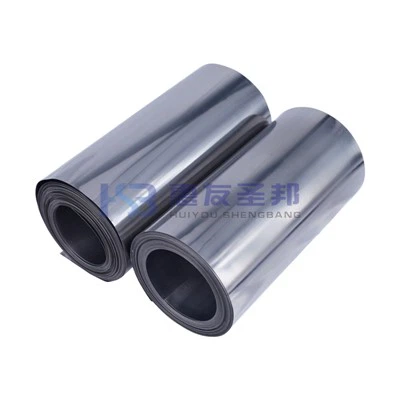


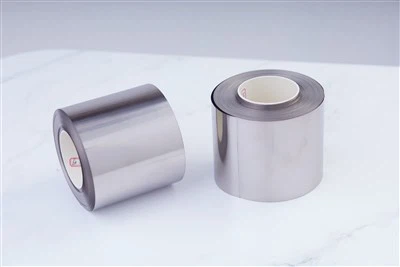

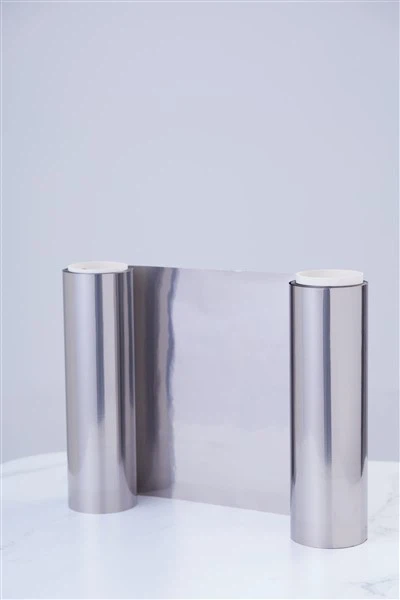


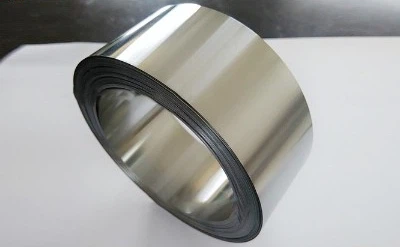
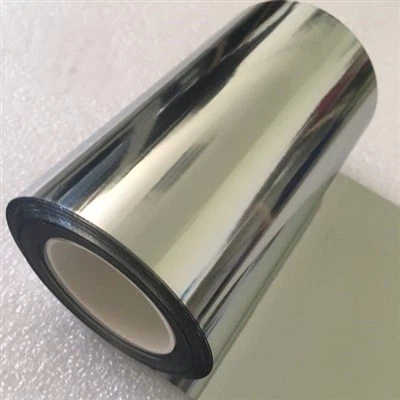

Refractory metals are a class of metals that are extraordinarily resistant to heat and wear. This group includes a broad range of metals, but among the most commonly recognized are zirconium (Zr), tantalum (Ta), niobium (Nb), tungsten (W), and molybdenum (Mo). They are characterized by their high melting points, which are considerably higher than those of iron, cobalt, and nickel.
Zirconium (Zr)
Zirconium has a melting point of 1855°C and is known for its corrosion resistance, especially against acids. In industry, it's used in nuclear reactors due to its low neutron-capture cross-section and in the chemical industry for constructing corrosion-resistant equipment.
Tantalum (Ta)
With a melting point of 3017°C, tantalum is highly corrosion-resistant. It's used to make electronic components such as capacitors and high-power resistors. Tantalum is also used in the production of superalloys that have high strength and stability at elevated temperatures for aerospace applications and in medical implants due to its biocompatibility.
Niobium (Nb)
Niobium's melting point is 2477°C. It is used in the construction of jet engines and rocket subassemblies, as well as in superconducting magnets due to its excellent superconducting properties.
Tungsten (W)
Tungsten has the highest melting point of all metals at 3422°C, which makes it invaluable for its high-temperature structural properties. It is widely used in filaments for light bulbs, electron and X-ray tubes, and as alloying elements in steel to enhance hardness and resistance to wear and temperatures.
Molybdenum (Mo)
Molybdenum, with a melting point of 2623°C, is used in aircraft parts, electrical contacts, industrial motors, and filaments. Its high-temperature strength and thermal conductivity make it ideal for use in furnace parts, while its electrical properties are utilized in vacuum tubes.

Common Features of Refractory Metals
Refractory metals share several key properties that make them stand out as a unique group of materials for high-performance applications. These include:
High Melting Points
All refractory metals have melting points exceeding 2000°C (3632°F), with tungsten having the highest melting point of any metal at 3422°C (6192°F). This allows them to remain stable and functional in extreme heat environments.
Exceptional Strength at High Temperatures
These metals maintain their mechanical strength and resist deformation under stress at elevated temperatures, making them ideal for applications in aerospace, power generation, and industrial furnaces.
High Density
Refractory metals like tungsten and rhenium are incredibly dense, enabling their use in radiation shielding, counterweights, and high-stress applications.
Corrosion Resistance
Most refractory metals are chemically stable and resist oxidation and corrosion in aggressive environments. Tantalum, for instance, is highly resistant to acids, making it suitable for chemical processing.
Hardness and Wear Resistance
Refractory metals are exceptionally hard, making them resistant to wear and abrasion. Tungsten, for example, is widely used in cutting tools and hard coatings.
Good Thermal and Electrical Conductivity
These metals conduct heat and electricity effectively, which is essential in applications like electronics, heat exchangers, and rocket engine components.
Versatility in Alloys
Refractory metals readily alloy with other materials to enhance properties such as machinability, strength, and resistance to creep or oxidation. Alloys like TZM (molybdenum-based) and C103 (niobium-based) are examples of tailored solutions for specific applications.
|
Property |
Molybdenum (Mo) |
Tantalum (Ta) |
Tungsten (W) |
Niobium (Nb) |
Rhenium (Re) |
|
Melting Point (°C) |
2623 |
3017 |
3422 |
2477 |
3186 |
|
Density (g/cm³) |
10.28 |
16.65 |
19.25 |
8.57 |
21.02 |
|
Hardness (Mohs) |
5.5 |
6.5 |
7.5 |
6 |
7 |
|
Thermal Conductivity (W/m·K) |
138 |
57 |
173 |
54 |
48 |
|
Electrical Resistivity (µΩ·cm) |
5.3 |
12.4 |
5.5 |
15.2 |
19.3 |
|
Coefficient of Thermal Expansion (10⁻⁶/K) |
5.3 |
6.3 |
4.5 |
7.3 |
6.2 |
Applications of Refractory Metals in Industry
Refractory metals are widely used in a variety of industries due to their unique combination of properties, including high melting points, strength, and resistance to corrosion and wear. Some common applications of refractory metals include:
Aerospace and defense
Refractory metals are used in aircraft engines, rocket nozzles, and other high-temperature applications in the aerospace and defense industries.
01
Medical devices
It can be used in medical devices such as pacemakers, due to their biocompatibility and resistance to corrosion.
02
Steel and alloys
Refractory metals are often added to steel and other alloys to improve their strength and durability.
03
Electronics
Tungsten and molybdenum are used in the production of electrical contacts, while niobium is used in superconducting magnets for MRI machines.
04
Chemical processing
Tantalum and niobium are used in chemical processing applications due to their resistance to corrosion by acids and other chemicals.
05
Certificate


FAQ
We're professional refractory metal foil manufacturers and suppliers in China, specialized in providing high quality customized service. We warmly welcome you to buy refractory metal foil for sale here and get pricelist from our factory. For price consultation, contact us.
Nickel based Alloy Foil, refractory metal foil, Molybdenum rhenium Alloy Foil