

Your Professional Ultra-thin Aluminum Foil Supplier!
Shaanxi Huiyou Shengbang Precision Foil Manufacturing Co., Ltd. specializes in the production of Non-Ferrous Metal Foils, Refractory Metal Foils, Rare (Precious) Metal Foils, Speaker Parts, Titanium Stamping Parts,etc.
Product Application
Our company's titanium foil is used in 3C, chemical, and battery industries; tin foil is used in the electronics field to make circuit boards, etc.zirconium foil is mainly used in nuclear reactors and aerospace; copper foil is used in condensers, heat exchangers, etc.
Advanced Production Equipment
Our company has advanced Sendzimir twenty-high rolling mill, four-high rolling mill, tensioning and leveling machine, annealing furnace, metal slitting machine, foil cleaning and deoiling unit and other equipment.
Quality Guaranteed
Shaanxi HYSB Precision Foil Co., Ltd.Companies get GB/T19001-2016/1S09001:2015Quality management system certification.
Quick response
We promise to respond to your inquiries within 24 hours to ensure that you receive the information and support you need in a timely manner.


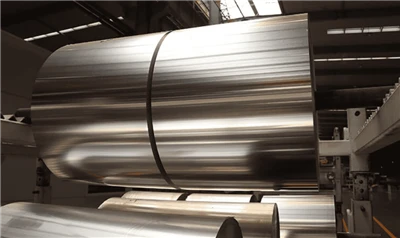


Features of ultra-thin aluminum foil
Light and thin
The thickness of ultra-thin aluminum foil is usually less than 0.01 mm, and can even reach between 0.005 and 0.009 mm, making it very light and transparent.
01
Flexible
Due to its ultra-thin characteristics, ultra-thin aluminum foil is soft and easy to fold, easy to process and form, and suitable for applications that require flexibility.
02
High moisture resistance
Aluminum foil has good moisture resistance, and ultra-thin aluminum foil also has this feature, which can effectively block moisture and humidity and keep the inside of the package dry.
03
Light-blocking and heat-insulating
Ultra-thin aluminum foil can block light and reduce light transmission. At the same time, it has a certain heat-insulating effect and protects the internal items from the influence of external temperature.
04
Corrosion resistance
A dense oxide protective film is easily formed on the surface of aluminum foil, which makes it have excellent corrosion resistance, and ultra-thin aluminum foil also has this feature.
05
Application of Ultra-thin Aluminum Foil
Food industry:
●Packaging: Ultra-thin aluminum foil is widely used in food packaging such as chocolate, candy, meat products, etc. due to its good heat resistance, airtightness and oxygen barrier properties, which can effectively protect the taste and aroma of food.
●Baking tray material: Its excellent thermal conductivity makes ultra-thin aluminum foil an ideal baking tray material to ensure that food is heated evenly.
Pharmaceutical industry:
●Pharmaceutical packaging: Ultra-thin aluminum foil can effectively isolate the influence of external light, moisture and oxygen, and extend the shelf life of medicines.
●Medical equipment: Ultra-thin aluminum foil is used to make packaging bags for sterile instruments due to its light and easy processing characteristics.
Electronic industry:
●Electronic components: Ultra-thin aluminum foil is widely used in electronic components such as capacitors and batteries due to its good electrical conductivity.
Construction industry:
●Sound insulation and heat preservation materials: Utilize the sound insulation performance of ultra-thin aluminum foil and apply it to sound insulation cotton, heat preservation materials, etc. to achieve heat insulation and sound insulation effects.
Ultra-thin aluminum foil thickness range
Ultra-thin aluminum foil thickness is usually 0.01 mm (10 microns) and below, but sometimes can reach 0.002 mm (2 microns). The thickness of ultra-thin aluminum foil varies depending on the use requirements. Common thickness ranges include:
0.01 mm (10 microns)
Aluminum foil of this thickness is commonly used in food packaging and some lightweight insulation materials, combining plasticity and strength.
0.006 mm (6 microns)
Aluminum foil of this thickness is mostly used in the electronics field, such as battery separators, conductive shielding materials, etc., with higher flexibility and better conductivity.
0.002 mm (2 microns)
This is the extreme thickness of ultra-thin aluminum foil, which is often used in special high-tech products, such as ultra-thin shielding materials or special electronic devices. Due to its extremely thin characteristics, it can provide excellent flexibility and operability.


Processing process of ultra-thin aluminum foil
The processing process of ultra-thin aluminum foil mainly includes the following steps:
Casting
Place the pure aluminum ingot into a gas furnace to melt, return to the melting furnace for 3 to 8 hours, then inject it into the mold, accelerate solidification by water cooling, and take out the aluminum ingot for processing.
Homogenization
Further process the aluminum ingot to ensure the uniformity of its composition and structure.
Surface cutting
Scrape off the surface of the aluminum ingot to make its surface extremely smooth.
Hot rolling (optional)
According to the processing requirements, the aluminum ingot may need to undergo multiple hot rolling processes to gradually reduce the thickness.
Cold rolling and foil rolling
The aluminum ingot undergoes multiple thinning processes, and the technicians constantly adjust the pressure and use coolant to prevent adhesion until it is rolled to the ultra-thin thickness required by the customer.
Washing and winding
The rolled aluminum foil is cleaned and then wound into a coil.
Annealing
The aluminum foil is annealed to eliminate processing stress and improve its performance.
Foil cutting
Cut the aluminum foil into the required size and shape according to customer needs.

Conductivity and thermal conductivity of ultra-thin aluminum foil
Conductivity
Ultra-thin aluminum foil has good conductivity. Aluminum, as a metal, has excellent conductivity in itself, and ultra-thin aluminum foil still maintains this property after special processing. This makes ultra-thin aluminum foil widely used in electronic products, electrical equipment and other fields, such as electromagnetic shielding, signal transmission, etc.
Thermal conductivity
Ultra-thin aluminum foil also has excellent thermal conductivity. Its high thermal conductivity can quickly transfer heat from one place to another. This feature makes ultra-thin aluminum foil unique in baking, heating and other fields, such as heating elements for equipment such as ovens and steamers, or as an insulation layer for food packaging to keep the temperature of food. At the same time, the thermal insulation effect of aluminum foil also makes it widely used in building insulation and thermal insulation materials.
Packaging and transportation of ultra-thin aluminum foil
Packaging Materials:
PVC or polyester film composite packaging must be used to ensure the sealing and strength of the packaging.
The packaging cardboard must be a primary corrugated cardboard with standard thickness and quality, and the inner and outer layers must be coated with a film layer.
Packaging Form:
The packaging form of aluminum foil is usually reel-type for easy handling and storage.
The weight of each reel is strictly limited to ensure stability and safety during transportation.
Packaging Operation:
The integrity of the aluminum foil must be ensured during the packaging process to avoid damage caused by heavy objects such as crushing and impact.
Plastic steel belts should be used for binding to ensure the firmness of the packaging.
Other Precautions:
The packaging materials should meet environmental protection requirements and should not contain harmful substances such as heavy metals.
During transportation, attention should be paid to moisture, rain and sun protection to ensure that the quality of the aluminum foil is not affected.
Certificate


Frequently Asked Questions
We're professional ultra-thin aluminum foil manufacturers and suppliers in China, specialized in providing high quality customized service. We warmly welcome you to buy ultra-thin aluminum foil for sale here and get pricelist from our factory. For price consultation, contact us.
ultra thin aluminum foil, 3003 Aluminum Foil, 1235 Aluminum Foil